
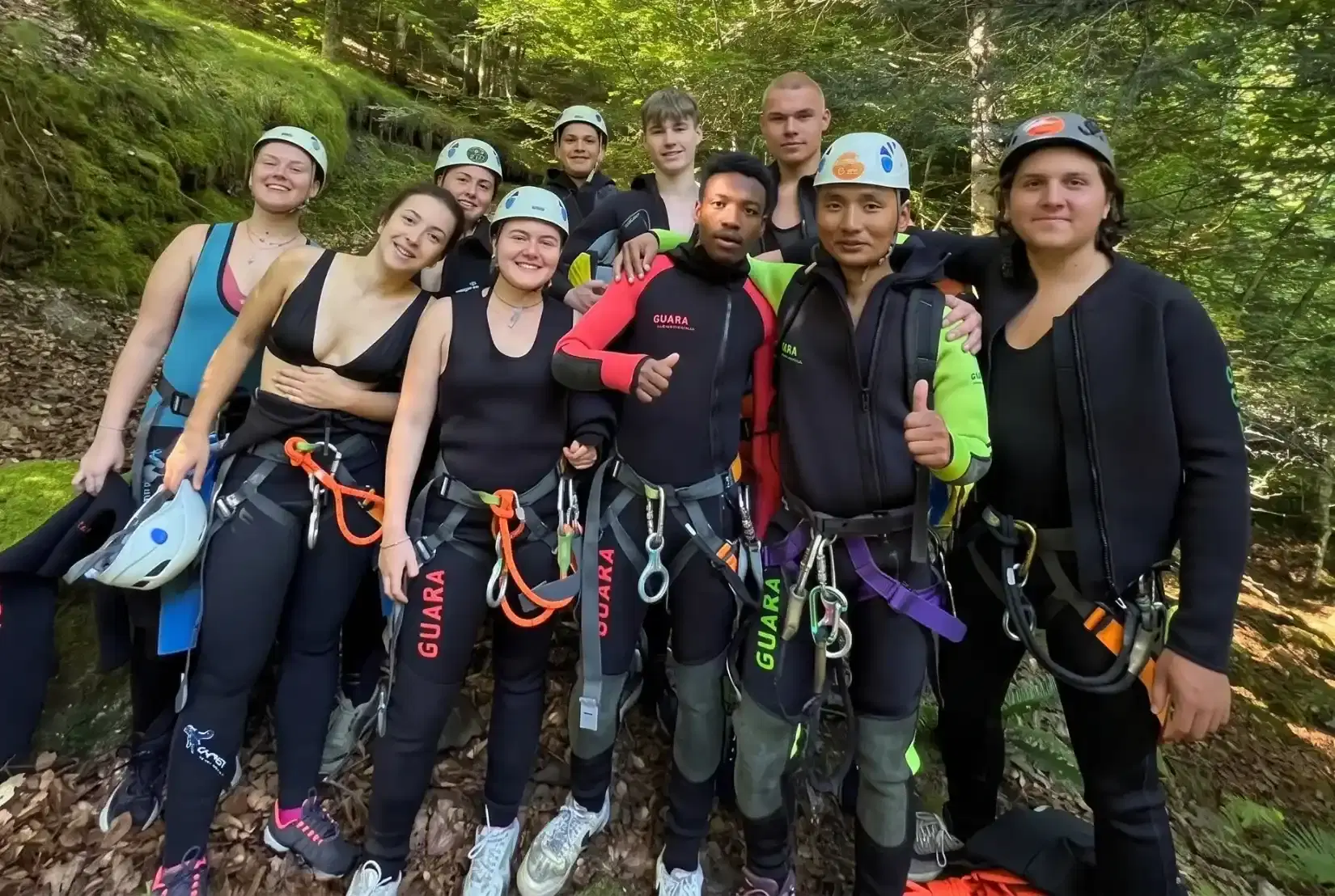

Canyoning is an exciting outdoor activity that may involve walking through streams, descending wet rocks, using ropes and moving through forested gorges. The attached images show participants wearing helmets, wetsuits, harnesses and safety equipment while travelling as a group.
Because canyon environments can be slippery and conditions may change quickly, safety preparation is essential.
Wear the Correct Equipment
Proper canyoning equipment helps protect participants from cold water, falling objects and slippery terrain.
Essential equipment may include:
Helmet
Wetsuit
Climbing harness
Ropes and carabiners
Suitable footwear
Gloves when required
All equipment should fit correctly and be checked before entering the canyon.
Follow the Safety Briefing
Listen carefully when the guide explains how to use the harness, rope and other equipment.
Participants should understand:
How to attach to the safety rope
Where to place their hands and feet
How to move during a descent
How to communicate with the guide
What to do if they feel uncomfortable
Do not begin a rope descent until the guide confirms that the equipment is secure.
Check Weather and Water Conditions
Rain can increase water levels and make rocks more slippery. Heavy rainfall upstream may also affect a canyon even when the weather nearby appears calm.
A trained guide should assess the weather, water flow and route conditions before the activity begins. The trip may need to be delayed or cancelled when conditions are unsafe.
Move Carefully on Wet Surfaces
Rocks inside a canyon may be covered with water, moss or loose material.
Take short, controlled steps and use available handholds. Avoid running, jumping or moving ahead of the group without instructions.
When crossing a stream or descending a wet section, follow the same route demonstrated by the guide.
Stay with the Group
Participants should remain close to the guide and avoid entering unfamiliar sections alone.
Group members can support each other, but technical decisions should be left to trained professionals. Wait for your turn at rope sections and allow enough space between participants.
Be Honest About Your Ability
Before the activity, tell the guide about:
Previous injuries
Medical concerns
Fear of heights
Limited swimming ability
Difficulty using technical equipment
Any discomfort during the activity
Canyoning should not be treated as a competition. Ask for assistance whenever you are unsure.
Protect the Natural Environment
Avoid leaving rubbish, damaging plants or disturbing wildlife. Follow established access routes and carry all personal waste out of the canyon.
Responsible behaviour helps preserve the area for local communities and future visitors.
Final Advice
A safe canyoning experience depends on suitable equipment, responsible weather decisions and clear communication with a trained guide.
Follow instructions, stay with the group and never attempt unfamiliar canyon routes without professional support.