
The world has a way of making you feel small. Not to diminish you — to remind you how much is still out there. After five seasons guiding in the Khumbu, that's still the thing I notice most at Base Camp: the trek isn't measured in kilometers. It's measured in the moments that rearrange how you see everything else.
Why 5,364 Meters Changes Your Sense of Scale ?
Everest Base Camp sits at 5,364m, and the number stops being abstract the moment Nuptse fills the whole sky. There's no viewpoint on the trail that prepares you for it. Trekkers who arrive expecting a finish line usually find something quieter instead — the sense of standing at the bottom of something enormous rather than the top of anything.
The most unforgettable journeys aren't measured in kilometers. They're measured in moments that change the way we see the world.
The Khumbu Ice: Where Technique Beats Strength
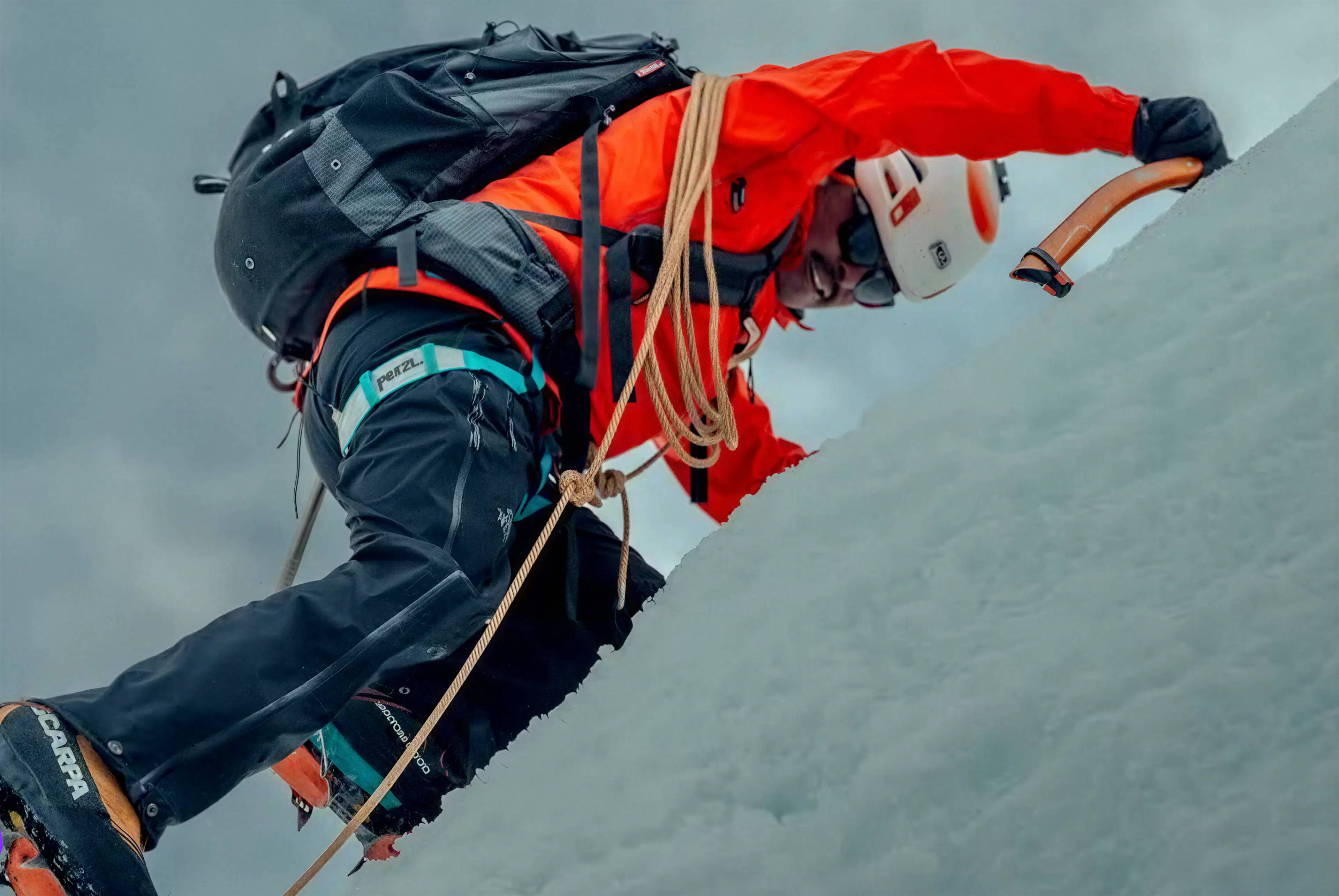
The image above is from a training traverse on blue ice. It looks dramatic, and it is, but almost none of it is about power. It's about crampon placement, rope management, and reading the surface before you commit weight to it. That principle carries down to the trekking route as well: the trekkers who do well are rarely the fittest ones. They're the ones who move deliberately.
How to Acclimatize on the Everest Base Camp Trek
Altitude is the real variable on this route, not distance. What works:
Build in acclimatization days at Namche Bazaar (3,440m) and Dingboche (4,410m) , walk high, sleep low
Cap daily sleeping-altitude gain at roughly 300–500m once you are above 3,000m
Drink 3 – 4 liters a day and eat more than you feel like eating
Treat a headache that doesn't respond to rest and fluids as information, not weakness
Descent is always available and always works. No schedule is worth a serious altitude problem.
Photographing the Everest Region at High Altitude
I work as a high-altitude photographer and drone pilot alongside guiding, and cold is harder on gear than it is on people. Keep spare batteries against your body, expect roughly half your usual battery life above 4,500m, and let your lens warm up slowly when you come indoors so condensation doesn't form on the glass. The best light in the Khumbu is the twenty minutes before sunrise from Kala Patthar , be in position early, not on the way.
Best Season to Trek to Everest Base Camp
Autumn, from late September through November, gives the clearest mountain views and the most stable weather. Spring, March through May, is warmer, greener at lower elevations, and overlaps with the climbing season, so Base Camp itself is alive with expedition activity. Both are excellent. Monsoon and deep winter are for people who specifically want the emptiness.
What I Tell Every First-Time Trekker
Walk slower than you think you need to. Talk to the lodge owners in Khumjung and Pangboche , the Sherpa history of this valley is more interesting than any summit statistic. And leave one day unplanned, because the moment that stays with you is almost never the one on the itinerary.
If you're planning an Everest Base Camp, Gokyo Valley, or Three Passes trek this season, send me a message — happy to talk through routing and timing.