
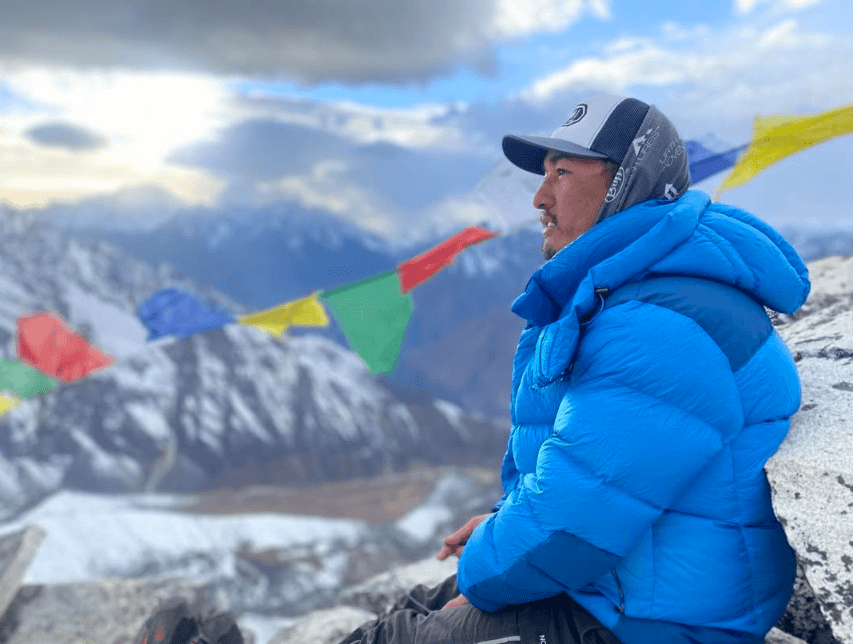
I started climbing mountains in 2009. And since then, this profession has been nothing short of highs and lows. Literally, too.
Nothing beats the experience of looking down at the world from the summit of the 8000ers, or any mountain for that matter. The joy is even more indescribable the first time you do it.
The first sight of the sea of clouds, or the curves of nature which you’ve never seen before, almost makes you forget the extremely difficult journey you’ve had to make to get there.
But, let’s not talk about the good part of mountaineering.
I’ll rather deal with the topic that would perhaps one day help you preserve the one life you have: patience.
Why it matters:
You can be the most technically gifted person or have the most durable body in the world, but patience is what keeps you alive in the mountains.
Every climber spends months training their body, studying the routes, sharpening their climbing skills, thinking about all the costs they might incur or the season to make an attempt, and the list goes on.
And that is fine. You must do all those things if you want to have a good chance to summit successfully. They are also the things that you have full control of. Only nature can have the last word on this matter, but we all accept it.
What most won’t consider or get suggested is patience, or to build it.
You can be the most technically gifted person or have the most durable body in the world, but patience is what keeps you alive in the mountains. Cultivating the habit of patience means making good, rational, and wise judgments on the high mountains which are just waiting for you to make a single mistake.
I do not intend to make you fear the mountains. Far from it. Every mountaineer knows that the feeling of joy and euphoria after you reach the summit is because you’ve defied the hardships and the possibility of death.
Fear has no place on the mountains.
I just want you to have a clear and grounded perspective on climbing a mountain and think about something that you generally don’t hear from others.
The “How” of the matter:
This calmness and rationality bring forth the wisdom in you. A level of cautiousness. An ability to gauge your situation objectively, clear of your passion and burning desire. Courage when fear is in your path and a healthy apprehension when you’re about to be foolishly courageous.
Okay. So what does it mean to have patience? What does it look like in action? Is it an ability to wait when the weather is bad? To calmly wait on the queue to the summit, above 8,000 m., without getting angry? Or is there something more to it?
Well, yes to all.
When you’ve personally seen or experienced tragedies climbing the mountains, the meaning to the word “patience” seems to broaden quite a bit.
To me “patience” is an ability to stay calm and rational even when things seem to be turning very wrong.
This calmness and rationality bring forth the wisdom in you. A level of cautiousness. An ability to gauge your situation objectively, clear of your passion and burning desire. Courage when fear is in your path and a healthy apprehension when you’re about to be foolishly courageous.
It is essentially mastering yourself: your thoughts and your emotions.
I am not a philosopher and I am not giving you philosophical advice, even though it might sound as such. But, mountaineering is neither a normal nor an easy activity. Maybe that's why it sounds like philosophical advice.
But, I’ll show you how it looks like in practice, too:
Before the climb:
It is better to consider a mountain an enemy to be conquered and prepare your mind as such than consider it a friend and underestimate its hostility.
First, let’s be strictly bound to mountaineering.
Train your body. Go to the gym. Run a few kilometers daily. Go to a climbing gym and do the toughest sections you can and with repetition. If you get time, hike on some weekends.
Contact your expedition agency and your climbing partners (if you have). Do a thorough study on route, logistics, equipment, etc. These days most of those things are handled by the agencies themselves, but knowing about them is in your benefit.
Understand all the hazards that you might face on the mountains and what you could do if you got unfortunate enough to face it. Prepare for the worst. Mountains are beautiful and majestic, but it is no friend of yours.
This much everybody can tell you.
But what goes inside you during this time?
Okay, for context, let’s say you’re about to climb a mountain for the first time. An 8000er, no less. It has been your dream since forever. And now, it is being realized.
Telling that you’re excited would be an understatement. You’re giddy with it.
This is where I tell you to stop and take a good look at your situation.
You’re not visiting your loved ones after a long time. You’re trying to climb a mountain which, as said earlier, is not a friendly territory. I hope I am not sounding harsh with my words here, and you might call it a difference of opinion.
It is better to consider a mountain an enemy to be conquered and prepare your mind as such than consider it a friend and underestimate its hostility.
It throws you an extreme cold, harshest winds, murderous avalanche, vertical paths, and deprives your lungs of oxygen. How can it be your friend?
Realizing this is being rational and objective. Combine this with all of the above suggestions, and you will have cultivated a habit of achieving delayed gratification.
You can beam with pride, but at the summit and after you’ve safely reached the base camp.
Also, you can have this same approach in every part of your life too.
During and after the climb:
You’ve only got one life. Nothing is more priceless than this. You can have your summit in the future.
This is where I will be to the point.
You’ve done your homework and chose a good expedition company and guides to take you to the summit. (If you’re going solo, hats off to you.)
Before I continue, let me establish this clearly: your life comes first, not glory.
Weather windows, snowfall, avalanche conditions, wind, visibility, or unstable terrain can force you to remain at the camp. And for many days. You might be furious at your agency for not knowing what the weather would be like and wasting your time. And you desperately want to move.
Don’t. Be rational. Be calm. Anger has no place on the mountains just as fear.
Nobody can predict the weather on the mountains. So, you either wait for the favorable weather or you return. People can remain in the base camp for weeks waiting for the favorable weather for summit push.
Next comes acclimatization.
Well, it is something I don’t need to explain too much. It will be felt by the climbers themselves. But, climb high, sleep low, rest, recover, repeat. That’s the key and it also requires your steady approach and level headedness.
During and after the acclimatization, when you start to climb, this is where the mountain actually starts to test you.
The wind will be biting. The crevasses seem unnaturally deep. The cold seems unnatural. And the list goes on. It will test your body, your will power, and your decision making. The higher you go, more unfriendly the mountain seems to become
And higher you go, the more unfriendly you might become to yourself.
You might be in a situation where you are only a few hundred meters from the summit and yet your guide tells you that you must wrap up the expedition. It could be the bad weather or it could be you showing serious signs of altitude sickness. How could you stop yourself from reaching the summit?
And this is where patience, or what I mean by patience, comes to matter.
You’ve only got one life. Nothing is more priceless than this. You can have your summit in the future.
Some of the greatest names in mountaineering have gone through this scenario. It is not unique to you.
So, make the right, bold choice.
Finally:
This is all that comes to mind at this moment.
But understand that what I’ve said here serves much more than simply successfully reaching the summit or saving your life. It works in all aspects of life. Implement it, and see the results for yourself.
It’s going to be difficult, but as always, the fruit of a difficult act is always the sweetest.